.png)
_svg.png)
%20Metal%20Expansion%20Joints%20%5BALT%5D.jpg)
Metal Expansion Joints
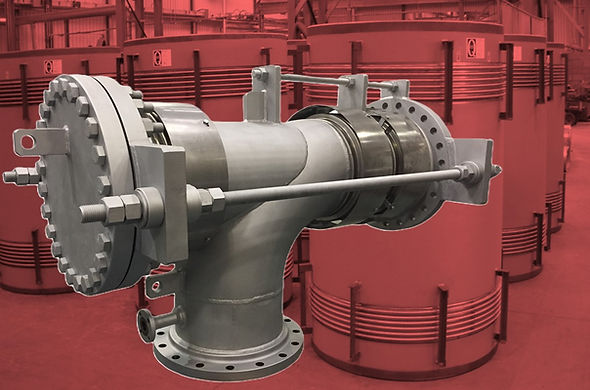
Complex bellows, known as expansion joints, are assemblies usually consisting of one or more bellows, and incorporating additional hardware such as hinge bars or restraints, are engineered for high-performance systems requiring movement absorption in multiple directions. Ideal for complex designs, they ensure system safety, reduce stress and extend the lifespan of critical piping networks and other applications in demanding sectors such as aerospace, nuclear, industrial and more.

What Is A Metal Expansion Joint?
A metal expansion joint is an engineered assembly that uses a metal bellows element to provide controlled flexibility in a piping or ducting system. It is designed to accommodate:
-
Axial movement (along the pipe axis), lateral movement (sideways offset) and/or angular movement (deflection);
-
Vibration and pulsation (where applicable);
-
Temperature changes, causing expansion or contraction in the pipework;
-
Pressure changes, which could cause warping in the pipeline.
Unlike a metal bellows element on its own, a metal expansion joint is typically supplied as a complete assembly that may include:
-
Bellows element(s) (formed or welded bellows);
-
End connections (flanges, weld ends, or custom interfaces);
-
Hardware (tie rods, hinges, gimbal frames, control units);
-
Liners (where needed to reduce flow-induced turbulence and protect the bellows);
-
Covers and shrouds (to protect the bellows from damage, contamination or external exposure).
If you searched for 'metal expansion joints', 'metallic expansion joints', 'bellows expansion joints' or 'pipe expansion joints', this page is focused on the complete expansion joint assembly - you can also look at Metal Bellows for more details on the bellows component itself.
Basic Movements of Expansion Joints

The relative shortening or lengthening, otherwise known as compressing or extending, of the expansion joint along its longitudinal axis (a.k.a. axial compression or extension, elongation). Axial movement is proportional to the maximum compression or extension possible for the bellows.

The relative angular movement of the two ends of the expansion joint so as to displace the longitudinal axis of the expansion joint from its initial straight-line position into a circular arc (a.k.a. angular rotation, rotational movement). Depending on external restraints, angular movement can be in one plane only or in all planes (universal angular movement).

The relative lateral movement of the two ends of the expansion joint perpendicular to its longitudinal axis (a.k.a. lateral offset, lateral deflection, parallel misalignment, direct shear, transverse movement). Lateral movement available is proportional to the distance between each bellows.

Key Design Considerations
(For Performance & Reliability)
Metal expansion joints are not one-size-fits-all. A reliable design is based on:
-
Movement requirements: axial/lateral/angular values and combinations;
-
Cycle life: expected number of cycles over service life (fatigue requirement);
-
Pressure and temperature: including transients and pressure cycling;
-
Pipework restraint strategy: anchors, guides and how loads are managed;
-
Flow conditions: velocity, turbulence, particulate content (drives liner needs);
-
Installation realities: misalignment allowance, access and maintenance constraints;
-
Environment: outdoor exposure, marine/offshore corrosion, high heat zones, etc.
Many expansion joint problems in the field come from mismatches between joint design and system restraint (e.g., insufficient guiding, unexpected lateral offsets, or unaccounted pressure thrust). Engineering review up-front reduces risk and downtime later.
Expansion Joint Configurations
Different pipe systems need different expansion joint configurations. Listed below are just the most common and most basic configurations of expansion joints there are - we are more than capable of designing and manufacturing any configuration you require. Common metal expansion joint types include:

Contains one bellows, with flanges or pipe, tube or union ends. No external restraints. Accommodates axial movement. Axial movement is proportional to the maximum compression or extension possible for the bellows.

Contains one bellows, with flanges or pipe ends. Two hinged restraints contain the force due to applied pressure resulting in low anchor forces. Accommodates angular movement in one plane only. Usually in set of two or more for larger movements.

Contains one bellows, with flanges or pipe ends. A universal ‘floating’ hinged restraint contains the force due to applied pressure resulting in low anchor forces. Accommodates angular movement in all planes (universal angular movement). Usually in set of two or more for larger movements.

Contains two bellows separated by a connecting pipe, with flanges or pipe ends. No external restraints. Accommodates axial, angular and lateral movement. Axial movement is proportional to the maximum compression and extension possible for the bellows, and lateral movement is proportional to the distance between each bellows.

Contains two bellows separated by a connecting pipe, with flanges or pipe ends. Two hinged restraints contain the force due to applied pressure resulting in low anchor forces. Accommodates lateral movement in one plane only. Lateral movement available is proportional or the distance between each bellows.

Contains two bellows separated by a connecting pipe, with flanges or pipe ends. Two or more tie bars with spherical seatings at their ends contain the force due to applied pressure resulting in low anchor forces. Accommodates lateral movement in all planes. Lateral movement available is proportional to the distance between each bellows.
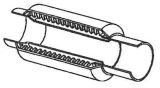
Contains one bellows, with pipe ends only. Robust outer cover protects bellows membrane. Accommodates axial movement. Axial movement is proportional to the maximum compression and extension possible for the bellows.

Contains one bellows, with pipe ends only. Robust outer cover and anti-torque device protects bellows membrane resulting in suitability for permanent below-ground installation. Accommodates axial movement. Axial movement is proportional to the maximum compression and extension possible for the bellows.

Contains one or more bellows, with pipe ends only. Robust outer cover protects bellows membrane, resulting in increased stability thereby accommodating large movements at high pressures. Accommodates axial movement. Axial movement is proportional to the maximum compression and extension possible for the bellows.

Contains one bellows, with pipe ends only. Robust outer cover protects bellows membrane. Accommodates axial movement. Axial movement is proportional to the maximum compression and extension possible for the bellows.

Contains three bellows, two are separated by a connecting pipe, and those two are separated from the other by the elbow-shaped connecting pie that diverts from the rest of the unit, with flanges or pipe ends. Three tie bars contain the force due to applied pressure resulting in low anchor forces. Accommodates axial movement, proportional to the maximum compression and extension possible for the bellows, and lateral movement, proportional to the distance between each bellows.

Listed here were just the most common basic configurations - we are more than capable of designing and manufacturing any configuration you require.

Typical Sectors & Applications
Expansion joints can be used in more applications in more sectors than we could possibly put down here. Anywhere there could be any movement, vibration or pressure and temperature change in any system (including but not limited to pipework or ducting), then you are likely to find expansion joints.
Regardless, here are some examples of the sectors we tend to supply expansion joints to:

steam, condensate, exhaust, flue-related piping systems

skid pipework, pipe racks, modular assemblies
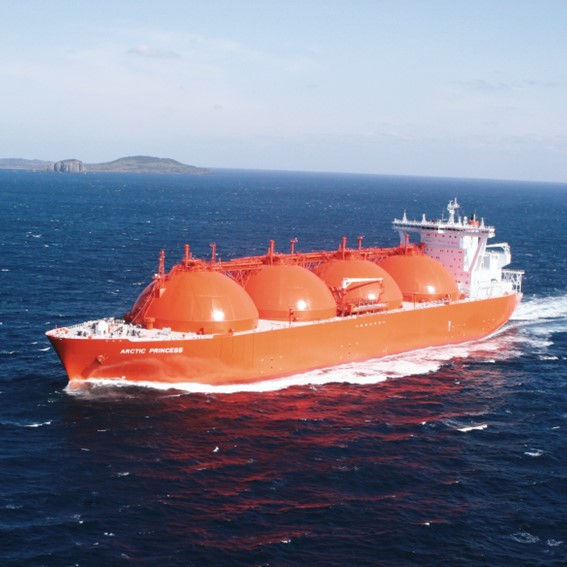
LNG (Liquefied Natural Gas), LPG (Liquified Petroleum Gas), scientific research facilities

utilities, chemical processing, manufacturing pipe systems

heated and chilled air venting
find your industry on our 'Sectors' page
(If you need rigid pipe assemblies or spools rather than flexible joints, see Metal Piping.)
Materials, Construction & Options
We tailor metal expansion joints to duty conditions, including:
-
Materials: stainless steel and other alloys selected to suit temperature, corrosion and fatigue requirements;
-
Bellows construction: formed or welded bellows (single- or multi-ply);
-
End connections: flanges, weld ends, threaded ends (where appropriate) or bespoke interfaces;
-
Liners: to protect bellows from flow-induced vibration or turbulence or to reduce pressure drop impacts;
-
Covers and shrouds: to protect the bellows from handling damage, debris, or external exposure;
-
Hardware: tie rods, hinges, gimbal frames and control units based on required restraint and movement direction.
If your application is primarily high pressure or extreme duty, a thick-wall or high-integrity configuration may be appropriate (see Thick‑Wall Bellows).

Engineering Support: Layout, Verification, Integration
A metal expansion joint works best as part of a system - not as a standalone component. We support projects with:
-
Selection of the correct joint type (axial, universal, hinged, gimbal, pressure-balanced);
-
Advice on layout, anchors and guides to control movement and loads;
-
Optional verification methods where required for fatigue‑critical duties (e.g., analysis support);
-
Integration guidance for interfaces, liners, covers and hardware arrangements;
-
Fast response for urgent applications via FastTrack where appropriate.
If you already have a design, we can manufacture to drawing. If you need validation of restraint and movement assumptions, we can support that too.
Inspection, Testing & Documentation
Depending on your project requirements and sector, expansion joint supply can be supported with:
-
Weld inspection and non-destructive examination (where applicable);
-
X-ray and other NDT methods where required by specification;
-
Pressure testing and leak testing (including helium leak testing where specified);
-
Documentation packs aligned to your quality, traceability and project needs.
(Exact inspection/testing scope is defined by your specification and duty conditions.)
How To Request A Quote (What We Need)
To quote for a metal expansion joint, please send:
-
Pipe size and line dimensions and available envelope;
-
Operating and design pressure and temperature (including transients if relevant);
-
Media and flow conditions (velocity, particulates, turbulence concerns);
-
Required movements (axial, lateral, angular) and any combined movement cases;
-
Expected cycle life (or operating profile);
-
End connection requirements (flanges, weld ends, interfaces);
-
Preferred joint type (if known), or pipe layout details so we can recommend;
-
Any required testing, inspection, approvals and documentation.
Send drawings or specs and we’ll confirm feasibility, recommend the appropriate joint configuration, and provide a quotation.
FAQs About 'Metal Expansion Joints'
How do expansion joints work? Expansion joints work by allowing controlled movement within a piping system and potentially restricting or limiting other types of movement. They absorb thermal expansion and contraction, reduce vibration and compensate for misalignment. The flexible element, often a metal bellows or rubber or fabric section, expands and contracts as needed, either axially, laterally, angularly or a combination of these, thus protecting the system from stress and potential damage. By accommodating these movements, expansion joints help maintain system integrity and prevent leaks or failures.
What’s the difference between a metal bellows and a metal expansion joint? A metal bellows is the flexible element. A metal expansion joint is the complete assembly designed to handle movement and manage loads in the pipework system.
Do I need an axial joint or a universal joint? That depends on your movement pattern and restraint strategy. Universal joints are often used for greater lateral movement; axial joints are used where movement is mainly axial and guiding or anchoring is controlled.
When are pressure-balanced expansion joints used? They are typically used where pressure thrust loads must be controlled to protect equipment nozzles or reduce anchor loads, especially in sensitive or constrained systems.
What is the fastest way to get a quotation? Send drawings or specs with pressure, temperature, movements and cycle expectations. If the layout or restraint is unclear, include a simple sketch or P&ID and we will guide you.
Read more FAQs here


